How to Make Your Business Visible on Google, ChatGPT, Claude, Perplexity, and AI Search
On this page
Your customers are no longer only searching on Google. Some are asking AI tools who to trust, who to hire, what to buy, and which business to contact. The question is no longer just “Can people find you on Google?” It is now: “Can AI tools find, understand, and recommend your business?”
It used to be simple. Someone wanted a plumber, a restaurant, or a marketing agency. They typed it into Google, scrolled through the results, and clicked a link. That was the game. Rank on Google, get found, get business.
That game isn’t over. But there’s a new one running alongside it.
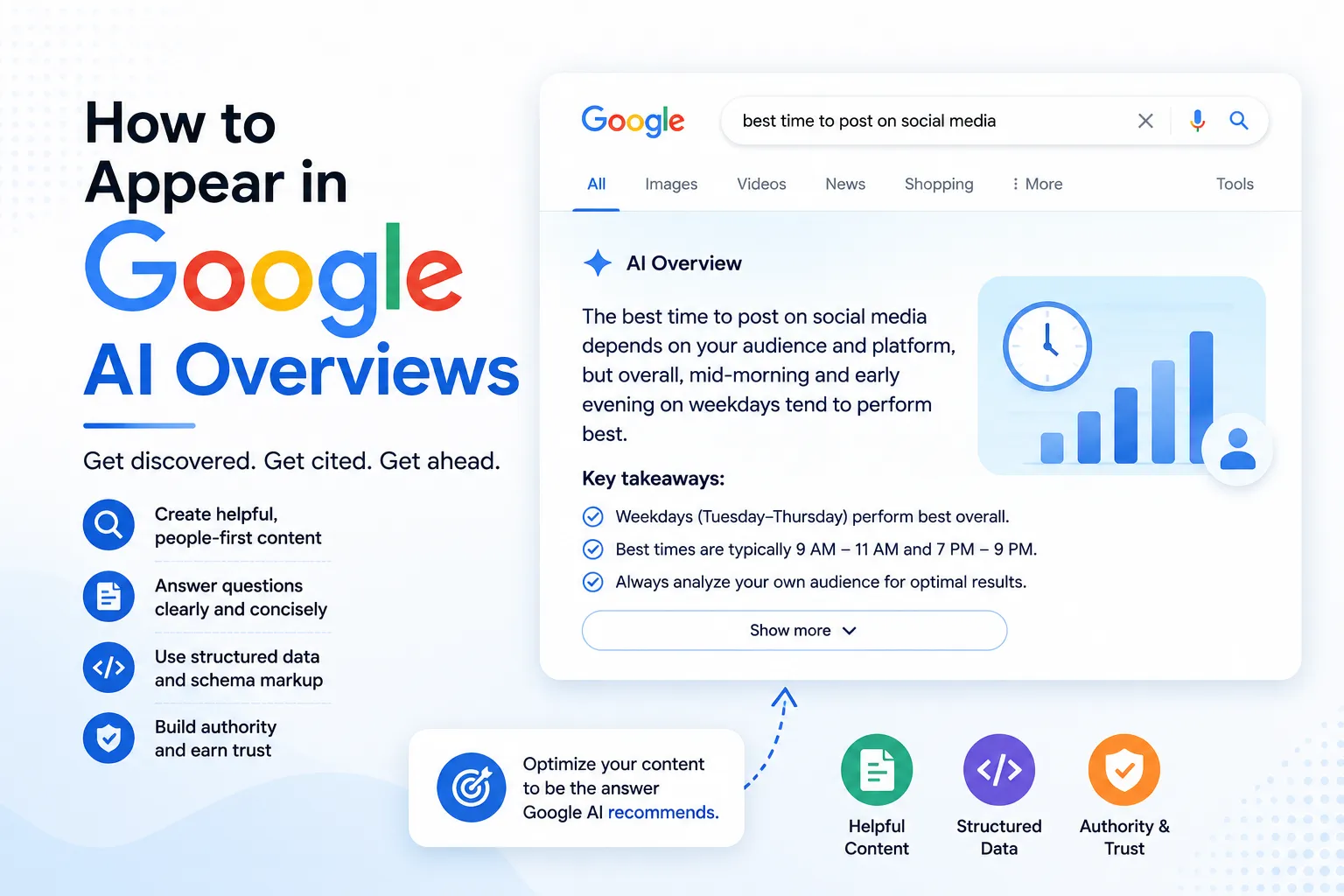
Today, millions of people skip the list of blue links entirely. They ask ChatGPT. They query Perplexity. They look at Google’s AI Overview and read the summary it generates, without clicking on anything. They ask their phone’s AI assistant. And in each of those moments, some businesses get mentioned by name. Others are completely invisible.
This guide is for business owners who want to be in both conversations: the traditional search results and the AI-generated answers. You don’t need to be a tech expert to do this. You just need to understand what’s happening, why it matters, and what to do about it.
Part 1: The Two Worlds of Search
What Is SEO? (And Why It Still Matters)
SEO, Search Engine Optimization, is the practice of making your website and content easy for search engines like Google to find, understand, and show to people searching for what you offer.
Think of Google as a giant library. SEO is how you get your book not just shelved, but placed at the front of the right section, with a clear title, readable chapters, and good reviews from other books that reference it.
When done well, SEO means:
- Your website appears when someone searches for what you sell
- Your business shows up in Google Maps results for local searches
- Your blog posts and pages rank above your competitors
- People click through to your site and become leads or customers
SEO still dominates in volume. Search Engine Land reported that Google handled approximately 5 trillion searches in 2024, which works out to around 14 billion per day. That is not going away anytime soon. If you’re not investing in SEO, you’re leaving a massive amount of traffic and opportunity on the table.
What Is AEO? (The New Game in Town)
Some marketers call this AEO, Answer Engine Optimization. Others call it GEO, Generative Engine Optimization. The idea is the same: make your business easier for AI-powered systems to understand, trust, and mention. It’s newer than SEO, and most business owners have never heard of it. At its core, it’s the practice of making your content easy for AI systems to find, understand, cite, and use when generating answers.
Here’s the difference in plain terms:
SEO gets you ranked. AEO gets you chosen.
When someone asks ChatGPT “what’s the best accounting software for a small restaurant?” ChatGPT doesn’t show them a list of links. It tells them. It generates an answer, and that answer might name two or three specific products or services. The businesses named in that answer win. The ones not named are invisible.
That’s AEO: being the business that AI tools reference when someone asks a question in your industry.
Many AI answer engines (ChatGPT, Perplexity, Google’s AI Overviews, Claude, Gemini) use some form of retrieval, search, or citation system to find relevant web content before generating an answer. This is often described as Retrieval-Augmented Generation, or RAG. In simple terms: the AI looks for useful sources, pulls information from them, and turns that into a direct answer. Your job, with AEO, is to be one of those sources.
Part 2: Why This Matters Right Now
The numbers are starting to tell a clear story:
- Gartner predicted that traditional search engine volume could drop by 25% by 2026 as people increasingly use AI chatbots and virtual assistants for answers.
- Ahrefs found that keywords with Google AI Overviews saw a major drop in click-through rate for the top-ranking result, with CTR falling from 0.073 in December 2023 to 0.016 in December 2025.
- Google still processes billions of searches every day (estimates put it around 14 billion daily), so SEO is not disappearing. But AI-generated answers are changing how much traffic websites actually receive from those searches.
- Recent studies suggest that AI-generated answers often cite sources that do not perfectly match Google’s traditional top organic results, meaning great SEO rankings alone don’t guarantee AI visibility.
That last point is crucial. A business can rank #1 on Google for a keyword and still be completely absent from AI-generated answers on the same topic. They’re connected, but they’re not the same thing.
The businesses building AEO strategies today are giving themselves a serious competitive advantage. Most of their competitors haven’t heard of it yet.
Part 3: How Search Engines and AI Engines Actually Work
How Google Decides Who Ranks
Google ranks your website based on three broad pillars:
1. Relevance: Does your content actually answer what the person searched for? Google uses sophisticated algorithms to match search intent with content. A blog post titled “How to Fix a Leaking Tap” is relevant to someone searching “leaking tap repair.”
2. Authority: Does the wider web trust your site? This is largely measured by backlinks, which are other websites linking to yours. If respected sites in your industry reference your content, Google takes that as a signal that you know what you’re talking about.
3. Experience (technical): Is your website fast, mobile-friendly, secure (HTTPS), and easy to navigate? Google penalises slow or poorly structured sites.
How AI Tools Decide What to Say
AI answer engines work differently. They’re not just matching keywords. They’re evaluating whether your content is citable. When an AI generates an answer, it looks for sources that are:
- Clear and specific: the answer to the question is explicitly stated, not buried in vague paragraphs
- Structured: content is broken into sections with clear headings, making it easy to extract individual answers
- Authoritative and consistent: your brand appears across multiple credible sources saying similar things
- Recent and updated: especially for tools like Perplexity, which heavily weights freshness
- Comprehensive: deep expertise on a topic, not surface-level content
Different AI platforms also have different preferences:
- ChatGPT favours depth and comprehensive guides
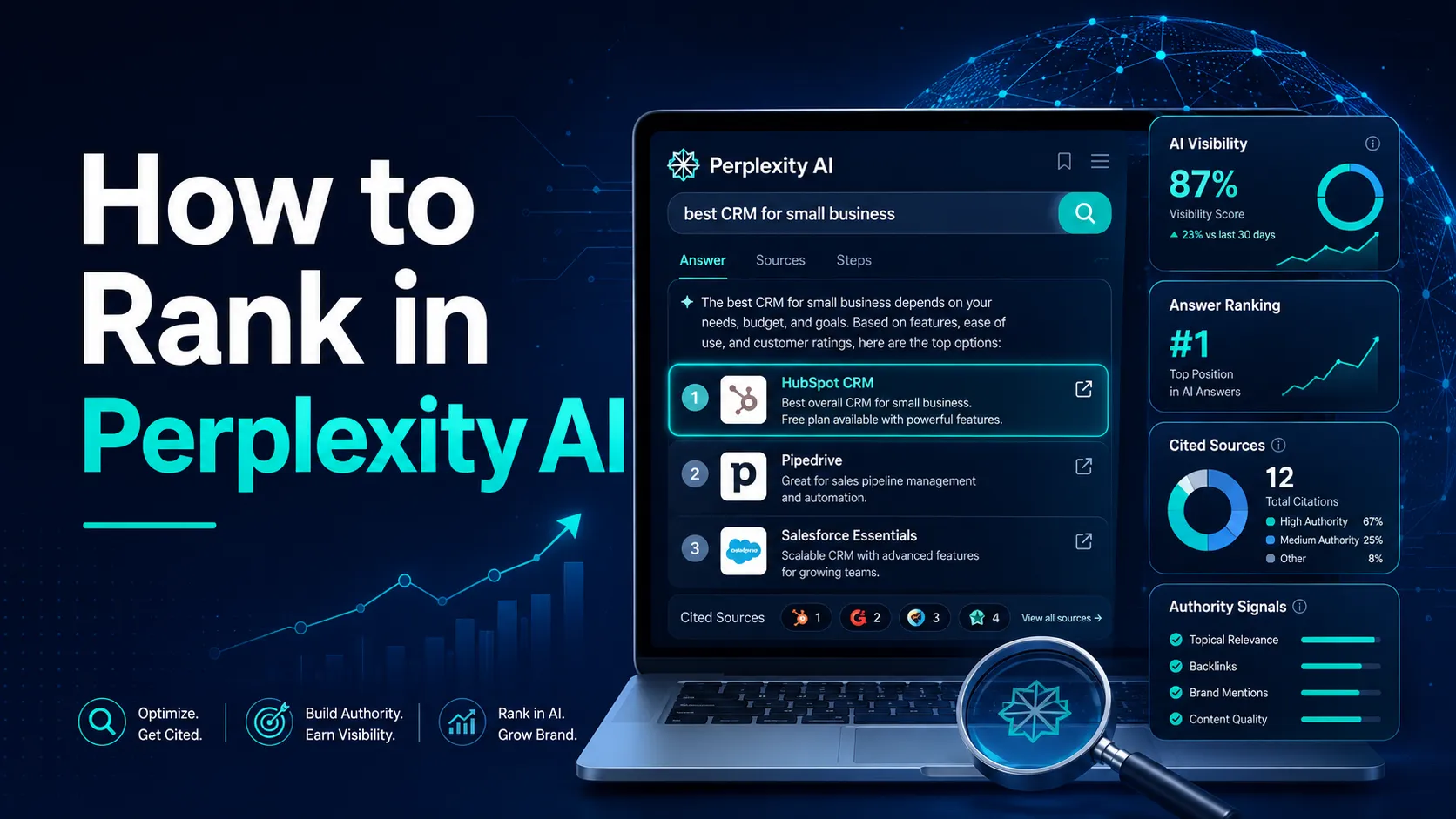
- Perplexity heavily weights recency, so update your content regularly
- Google AI Overviews leans on Google’s existing trust signals and structured data
Part 4: What You Should Actually Be Doing
The SEO Foundations (Non-Negotiable)
These are the basics that still matter enormously, and they also happen to support AEO.
1. Claim and optimise your Google Business Profile
If you serve local customers, this is the single highest-ROI thing you can do. Keep your name, address, phone number, hours, and categories accurate. Post updates. Respond to reviews. Add photos. This directly impacts who shows up in Google Maps and local search results.
2. Make sure your website is technically sound
Your site should load in under 3 seconds, work properly on mobile phones, and use HTTPS (the padlock in the browser bar). These aren’t optional extras. They’re the price of admission.
3. Write content that actually answers questions
Think about what your customers ask you in person, over the phone, or in emails. Those questions are your content brief. Write clear, helpful answers to each one. A plumber might write about “how to know if you have a hidden water leak.” A florist might write about “how far in advance should you order wedding flowers.” This content attracts people searching for answers and helps AI tools understand what you know.
4. Build your local authority
Get listed in relevant directories (Yelp, industry associations, local business directories). Earn backlinks from local news sites, partner businesses, and community organisations. These trust signals matter to both Google and AI systems.
5. Collect reviews consistently
Google reviews are trust signals for both search engines and AI tools. Make it easy for happy customers to leave reviews. A simple follow-up message with a direct link does the job.
The AEO Strategies (Where the Smart Money Is Going)
1. Structure your content to answer specific questions
Use clear headings phrased as questions: “What is [topic]?” “How does [process] work?” “What should I look for when choosing a [service]?” Then answer each question directly, in the first sentence or two under that heading. AI tools favour extractable answers.
2. Create a comprehensive FAQ page
FAQ pages are one of the easiest content formats for AI systems to understand and extract from. Gather the 15-20 most common questions in your industry and answer each one clearly and thoroughly. This single page can dramatically improve your AI visibility.
3. Add structured data to your website
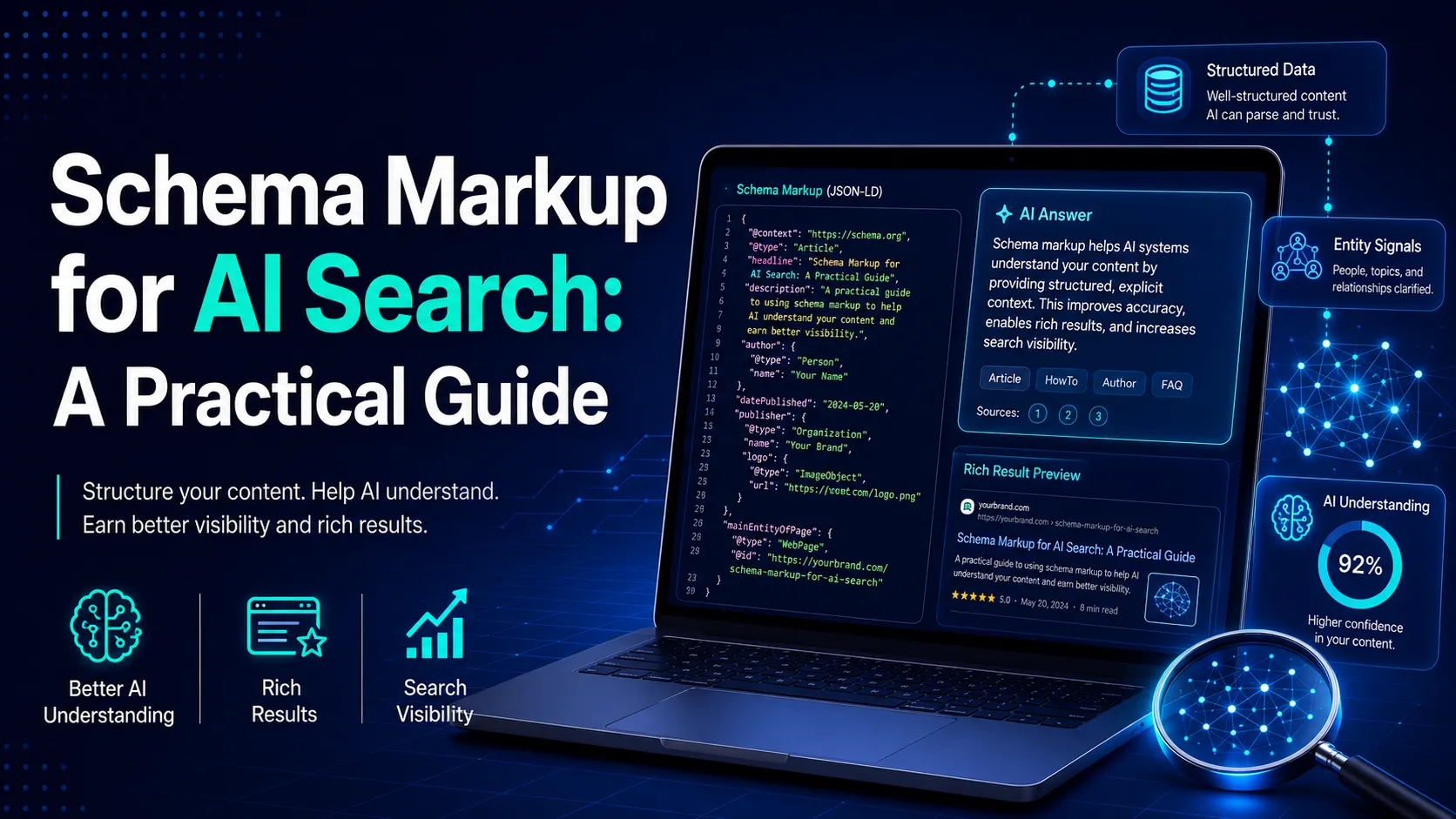
Structured data (also called Schema markup) is code that you add to your website to tell search engines and AI tools exactly what type of content is on each page: your business name, address, services, reviews, FAQs, and more. A web developer can implement this in an afternoon. It’s like giving AI systems a cheat sheet about your business.
4. Be consistent about what your business does
AI tools build a picture of your brand based on what they find across the internet: your website, your social profiles, press mentions, directory listings, review sites, and more. If these sources give conflicting information about what you do or who you serve, AI systems get confused. Consistent messaging across every platform builds the clear brand signal that gets you cited.
5. Write for depth, not just length
Publishing one definitive, comprehensive guide on a topic in your industry is worth more than ten shallow posts. AI systems favour sources that demonstrate real expertise. Think about the one resource in your field that doesn’t yet exist, and create it.
6. Build your brand’s presence beyond your own website
Guest articles on industry publications, podcast appearances, mentions in trade press, being quoted as an expert: all of these contribute to the web of signals that AI tools use to decide who the credible voices in your space are. Platforms like Wikipedia, Reddit, industry publications, review sites, and trusted directories often influence what AI tools surface in their answers. Third-party validation carries enormous weight.
7. Keep your content fresh
Outdated content is a red flag to AI systems. Set a reminder to review and update your key pages at least every six months. Update statistics, refresh examples, and add new sections where your industry has changed.
Part 5: The Practical Playbook — Start Here
If you’re a business owner reading this and thinking “okay, but where do I actually begin?” here’s a prioritised starting list:
This week:
- Verify and fully complete your Google Business Profile
- Make a list of the 20 most common questions your customers ask
This month:
- Publish a comprehensive FAQ page on your website answering those questions
- Audit your website speed (use Google’s free PageSpeed Insights tool)
- Ensure your business name, address, and phone number are identical across Google, your website, Yelp, and any directories you’re listed in
This quarter:
- Write 4-6 in-depth blog posts or guides addressing real questions in your industry
- Ask a developer about adding FAQ and LocalBusiness schema markup to your site
- Begin a consistent process of requesting reviews from satisfied customers
- Identify 2-3 industry publications or local media outlets where you could contribute an article or be quoted as an expert
Ongoing:
- Update your most important pages every 3-6 months
- Monitor what AI tools say about your industry and your competitors (search your category in ChatGPT and Perplexity periodically)
- Track your Google Business Profile performance monthly
Part 6: What This Means for Your Website
Your website can no longer be just a digital brochure.
It needs to become the clearest source of truth about your business.
That means your website should clearly explain:
- What you do
- Who you serve
- Where you operate
- What problems you solve
- What services or products you offer
- How your process works
- What questions customers usually ask
- Why people should trust you
- How someone can take the next step
When this information is missing, vague, or scattered across social media posts, both customers and AI tools struggle to understand your business.
But when your website is clear, structured, and regularly updated, it becomes easier for Google to rank you, easier for AI tools to reference you, and easier for customers to choose you.
This is why your website matters more, not less, in the age of AI search.
Part 7: The Mindset Shift
Here’s the underlying philosophy that ties all of this together.
Both SEO and AEO reward the same thing: genuinely being the most helpful, credible, and clear source of information in your space.
Google’s algorithm has spent years trying to surface the most useful content. AI systems are doing the same thing, just with different mechanisms. The businesses that win in both environments are the ones that truly invest in being helpful: creating real answers to real questions, building real trust with real people, and showing up consistently.
The shortcut mentality (keyword stuffing, cheap backlink schemes, thin content written to game the algorithm) never worked long-term in SEO. It won’t work in AEO either.
What does work is deciding to become the most useful business in your category, and then building the digital infrastructure that lets search engines and AI tools recognise that.
The Bottom Line
The way people find businesses is changing. Traditional search is being supplemented by AI-generated answers, and the businesses that understand both will have a significant edge.
SEO and AEO are not competing strategies. They’re two floors of the same building. Strong, structured, helpful content builds both your Google rankings and your AI visibility. The technical foundations are shared. The mindset is the same.
Start with the basics. Write like a human trying to genuinely help another human. Structure your content so machines can extract the value. Build your authority consistently over time.
Do that, and you’ll be found, whether someone is Googling it or asking an AI.
Want your business to show up on Google and in AI-generated answers?
OPAMEDIA TECH helps businesses build modern websites, SEO-ready content systems, structured pages, and AI-ready digital strategies that make them easier to find, trust, and contact.
If your business needs a stronger online presence, book a discovery call or send us a message to start the conversation.
Want to be the answer AI engines cite?
Opamedia builds websites, AI automation, and SEO/AEO/GEO visibility that turn search and AI answers into qualified leads.
Book a Discovery Call